Swim With Turtles Zanzibar
Tours & tickets

Hand-picked by our editors — only the best 5 encounters from 12 reviewed

Open today 08:00–18:00
Attendance: Moderate — August summer season
Arrive by 08:30 to enjoy the quietest cave conditions before daily tours arrive.
Free cancellation Instant confirmation Mobile voucher Verified partner Book now, pay later
Tickets

Choose your ticket

Verified partners for every tour, free cancellation where available, and instant confirmation on every booking.

Salaam Cave Turtle Encounter & Conservation Experience 3 hr
Standard Entry

Salaam Cave Turtle Encounter & Conservation Experience

4.3 (126)
€43
per person
Instant Mobile voucher Flexible — change up to 24h

Swim alongside rehabilitating sea turtles in pristine cave waters while learning about marine conservation

Reserve
Sea Turtle Encounter at Salaam Cave 4 hr
Standard Entry

Sea Turtle Encounter at Salaam Cave

4.3 (86)
€48
per person
Instant Mobile voucher Flexible — change up to 24h

Swim alongside sea turtles in a protected saltwater cave sanctuary while supporting conservation efforts

Reserve

Prices from verified partners. Availability updates in real time at checkout. Free cancellation policies apply where shown.

Highlights

What you'll see inside the attraction

The landmarks, rooms, and views travelers on this tour remember — all visible on a single visit.

Natural Tidal Pool

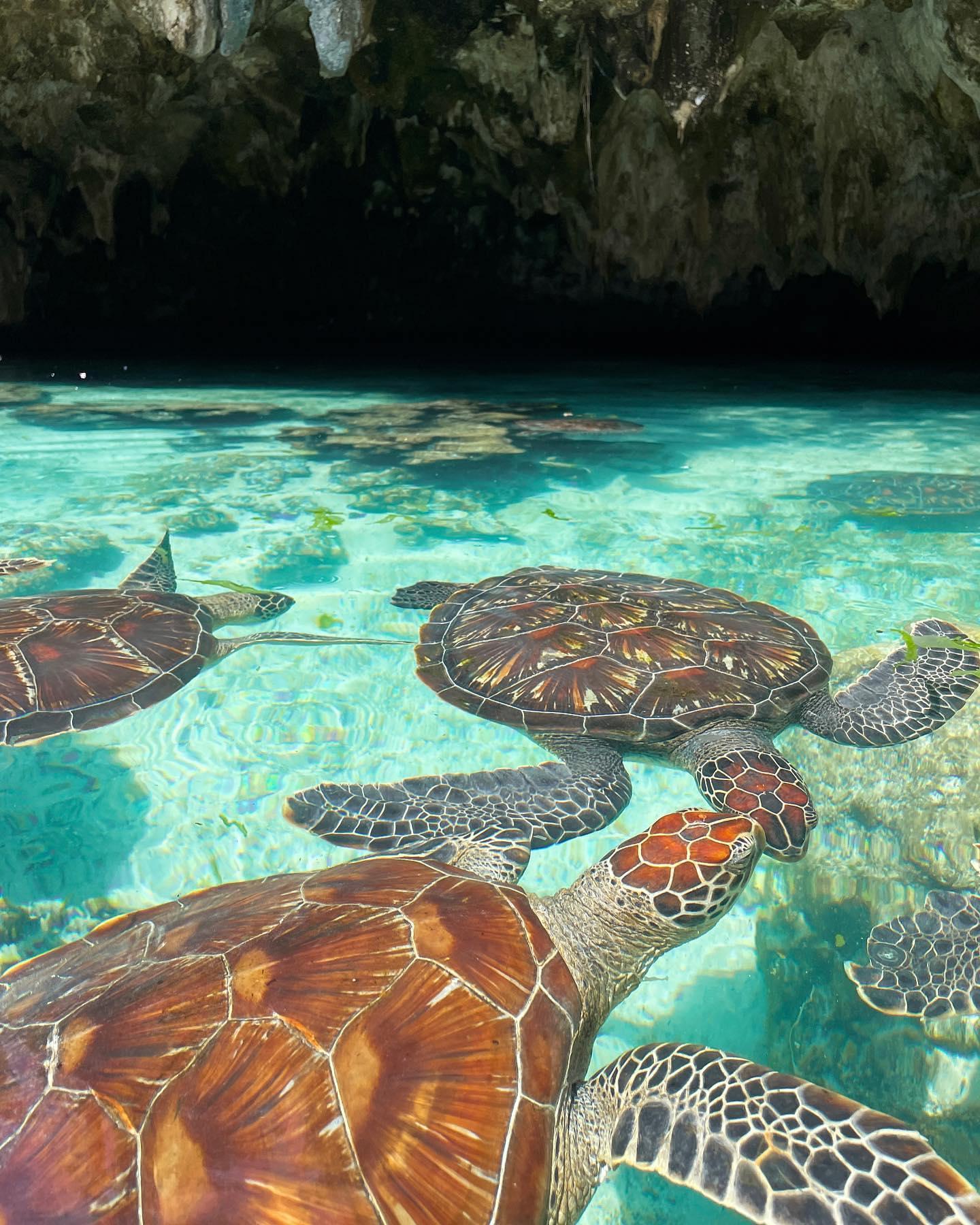
A serene, limestone-walled basin where rehabilitated turtles swim in protected, crystal-clear spring water.

Head to head

Swim With Turtles Zanzibar Salaam Cave Versus Nungwi Turtle Sanctuaries: Which Experience Suits You?

Those seeking a natural marine encounter should choose the cave environment, while those prioritizing accessible education prefer the managed pools; each offers a distinct perspective on local marine life.

Feature Top pick Salaam Cave Nungwi Sanctuary
Habitat Type
Managed coastal lagoon
Encounter Depth
Shallow shoreline pools
Interaction Style
Close-proximity feeding access
Travel Time
Based on Nungwi location
Conservation Focus
Rehabilitation and public awareness

Verdict: If you are planning to swim with turtles zanzibar salaam cave tours, expect a wilder setting, whereas the Nungwi location provides a more predictable wildlife interaction for those seeking convenience.

How your ticket works

Book your ticket in 3 steps

  1. 01

    Book online

    Choose your ticket, select your date, and reserve in under two minutes. Secure checkout handled by our verified partner.

  2. 02

    Receive your mobile voucher

    Instant confirmation by email, with a mobile voucher you can save offline. No printing, no queuing at a collection desk.

  3. 03

    Show & enter

    Arrive at the entrance, show your voucher on your phone, and walk in. Most tickets include priority or skip-the-line access.

Plan your visit

Everything you need to know before you go

Practical details for your visit straight from our verified partners — hours, access, rules, and how to get there.

Open today · 08:00–18:00
Opening Hours
08:00–18:00 daily
Address
Kizimkazi Dimbani, Zanzibar South Region, Tanzania
Arrival
08:00–10:00 for the best experience
Region
Southern Zanzibar coastal area
Storage
Not available on-site
Mon
08:00–18:00
Tue
08:00–18:00
Wed
08:00–18:00
Thu
08:00–18:00
Fri
08:00–18:00
Sat
08:00–18:00
Sun
08:00–18:00
Location

Address
Kizimkazi Dimbani, Zanzibar South Region, Tanzania
Region
Southern Zanzibar coastal area
Storage
Not available on-site

Dress code

Please wear modest clothing when transiting through Kizimkazi Dimbani village. Once inside the sanctuary, swimwear is appropriate for your swim with turtles zanzibar salaam cave tour.

Bags & security

Secure lockers are not provided, so please minimize personal items brought to the cave. Keep valuable electronics in a waterproof bag during your swim with turtles zanzibar salaam cave experience.

Photography

Photography is permitted and encouraged during your swim with turtles zanzibar salaam cave visit. Please ensure your device is protected with a waterproof case to prevent water damage.

Accessibility

The natural terrain of the cave features uneven limestone rocks which may be challenging for those with mobility issues. The swim with turtles zanzibar salaam cave activity requires basic swimming ability and comfort in chest-deep water.

What to bring

  • Swimwear
  • Towel
  • Waterproof phone case
  • Change of clothes
  • Refillable water bottle
  • Eco-friendly sunscreen

Not allowed

  • Sunscreen (non-reef safe)
  • Plastic bags
  • Alcohol
  • Tobacco
  • Drones
  • Fishing gear
  • Flash photography equipment
  • Loud speakers
  • Footwear with metal cleats
  • Glass containers

Families & strollers

This attraction is popular for family outings, though children should be supervised at all times near the water. Many visitors find the swim with turtles zanzibar salaam cave tickets a worthwhile investment for educational family engagement.

Food & drink

No food is sold within the cave sanctuary, so please bring your own bottled water and snacks. Ensure all waste is disposed of outside the conservation area to protect the turtles.

Around your visit

Everything else worth knowing

Best time to go, insider tips, nearby landmarks, and the cancellation fine print — flip through to skim what matters to you.

Cancellation policy

Flexible, no hidden fees.

Free cancellation is available up to 48 hours before your scheduled swim with turtles zanzibar salaam cave visit. Cancellations made within this window are non-refundable, and the 10 USD conservation fee is typically included in your pre-booked package price.

About

The place, in context

Salaam Cave sits at the southern tip of Unguja Island, where the limestone coastline fractures into tidal pools and submerged hollows that have sheltered green sea turtles for centuries. The site takes its name from the Swahili greeting — a nod to the tradition of fishermen greeting the turtles as they surfaced in the shallows each morning. By the early 2000s, hunting and nest disturbance had pushed the local population to the edge of collapse. A coalition of Kizimkazi Dimbani elders and marine biologists established the conservation zone in 2004, converting former hunting grounds into a protected nursery where injured turtles rehabilitate and juveniles learn to forage before migrating to deeper reefs. Today Salaam Cave functions as both sanctuary and education site. The shallow lagoon averages two meters at high tide, its sandy floor stippled with sea grass beds that draw herbivorous turtles from the open channel. The cave itself — a limestone overhang rather than a true cavern — provides shade during midday heat and serves as a gathering point for guided swims. Visitors wade into waist-deep water where green turtles, some bearing carapaces a meter across, glide past within arm's reach. The 10-dollar conservation fee funds ranger patrols, veterinary care for entangled or injured animals, and nest monitoring during the November-to-February nesting season. Rangers rotate shifts to prevent overcrowding; no more than twelve visitors occupy the lagoon at once. The turtles here are wild, not captive. They arrive at dawn to graze on algae-covered rocks, tolerate human presence with cautious indifference, then return to offshore feeding territories by late morning. This rhythm shapes the visitor experience: early arrivals encounter the most turtles, while midday visits offer clearer water but fewer sightings. The site operates under a no-touch protocol — swimmers may observe and photograph but must maintain a one-meter buffer. Violators face immediate removal and a report to the Zanzibar Marine Conservation Unit. Kizimkazi Dimbani, the village that administers Salaam Cave, lies three kilometers inland. Its economy rests on dolphin tours and turtle encounters, industries that replaced subsistence fishing after the 2004 conservation agreement. The transition was neither smooth nor universally welcomed. Some fishermen still resent the loss of access to prime netting grounds. Others have retrained as guides, leading swim with turtles zanzibar salaam cave experiences that blend biology lessons with Swahili folklore. The model remains fragile — effective only as long as tourism revenue exceeds what fishing once provided — but it has kept the turtle population stable and slowly growing since its implementation two decades ago.

"Rangers rotate shifts to prevent overcrowding; no more than twelve visitors occupy the lagoon at once."
Your experience

What a tour day looks like

A step-by-step walkthrough of the visit — what you'll see, how long each stage takes, and the details that matter.

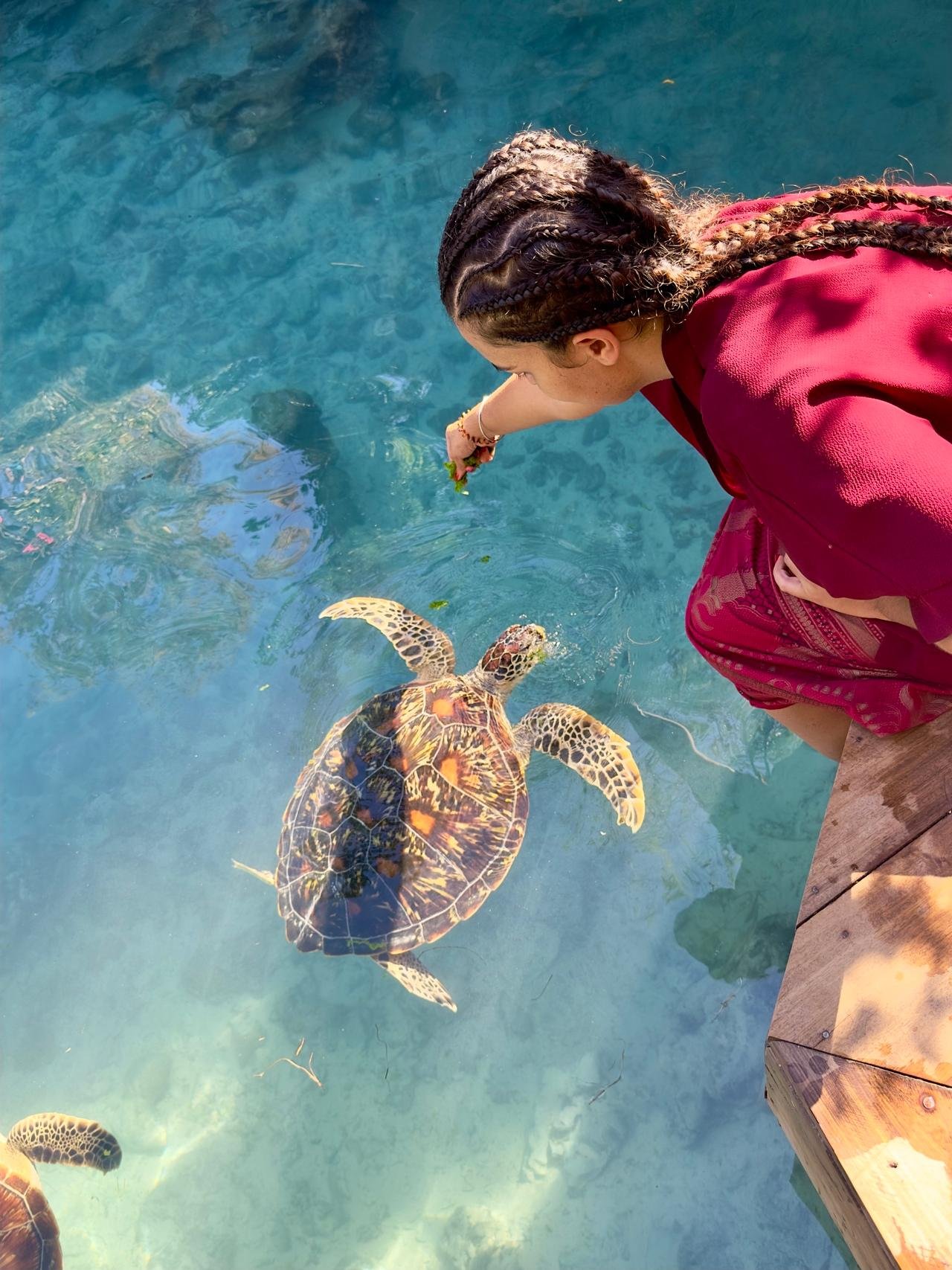
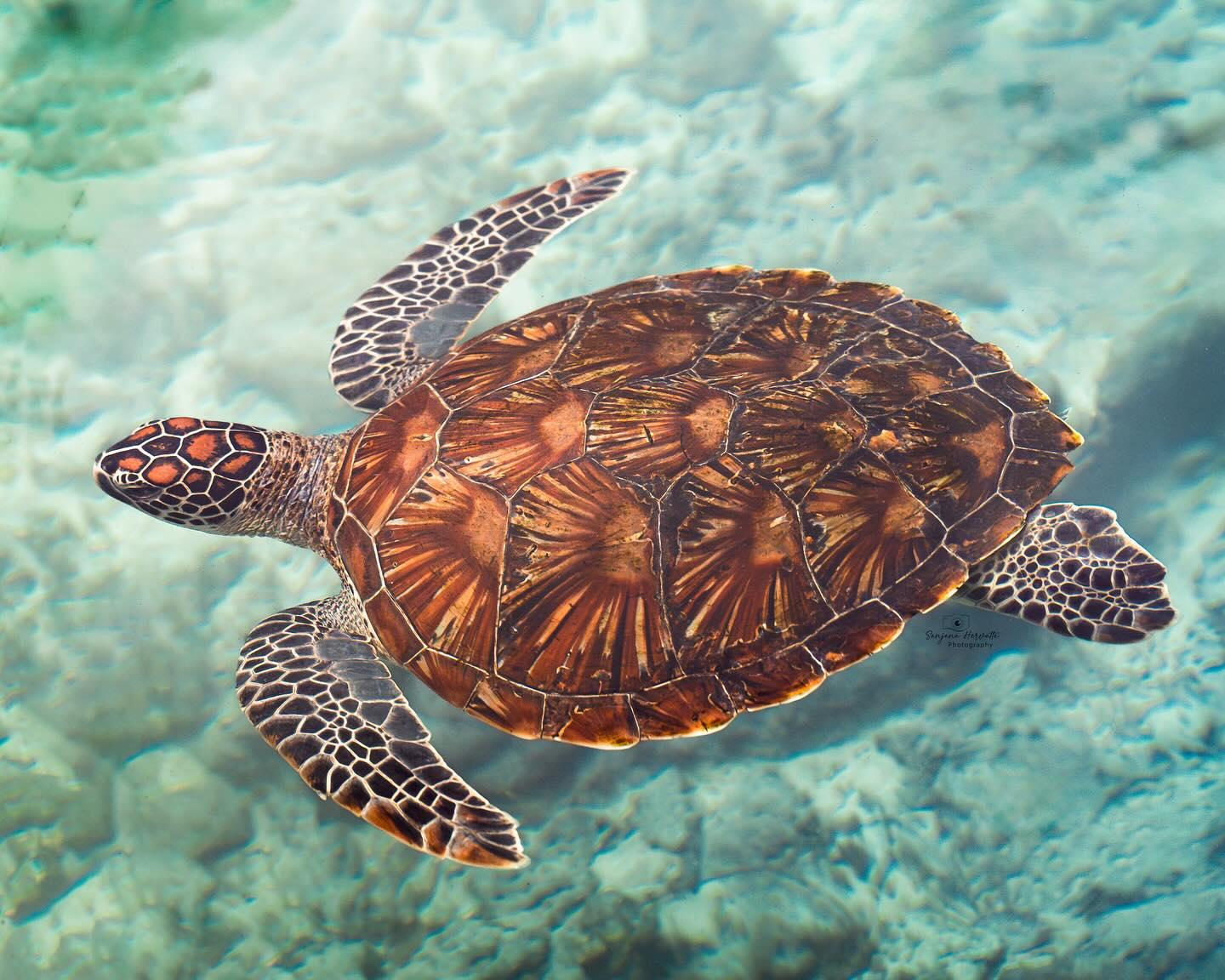
You arrive at Kizimkazi Dimbani by eight in the morning, when the air is still cool and the tour vans have not yet filled the gravel lot. A ranger collects the ten-dollar conservation fee, stamps your wrist with a turtle silhouette, and walks you down a coral-rock path to the water's edge. The lagoon spreads before you — knee-deep near the shore, deepening to chest height where the limestone shelf drops away. You wade in, the sand firm underfoot, and adjust your snorkel mask. Within minutes a green turtle surfaces ten meters out, its shell mottled bronze and olive, trailing a thin ribbon of sea grass. It dives, reappears closer, and begins grazing on the algae-slicked rocks at your feet. You drift motionless, arms at your sides, as the turtle sweeps past — close enough to see the serrated edge of its beak, the barnacles clustered on its flippers. Another turtle rises from deeper water, then a third. They move in slow arcs, surfacing to breathe every three or four minutes, their exhalations audible in the morning quiet. The ranger signals after twenty minutes. You return to the shallows, peel off your fins, and sit on the limestone ledge where the cave's overhang blocks the climbing sun. The ranger explains that the turtles you saw are juveniles, fifteen to twenty years old, still decades away from reproductive maturity. They will forage here another five years before migrating to the outer reefs. You towel off, climb the path, and leave Salaam Cave by nine-thirty — before the heat climbs and the next group arrives.

Frequently asked

Frequently asked questions about swim with turtles zanzibar salaam cave tours

What are the opening hours for swim with turtles zanzibar salaam cave?

Salam Cave is open daily from 08:00–18:00.

Is there an entrance fee for the swim with turtles zanzibar salaam cave?

Yes, there is a 10 USD conservation fee per person for entry and the turtle encounter at Salam Cave.

What is the best time to arrive at Salam Cave?

We recommend arriving between 08:00–10:00 to avoid peak heat and large tour groups.

Are swim with turtles zanzibar salaam cave tickets required in advance?

While you can often pay on-site, pre-booking swim with turtles zanzibar salaam cave tickets ensures availability during busy periods.

Can I book swim with turtles zanzibar salaam cave tours online?

Yes, various operators provide swim with turtles zanzibar salaam cave tours that include hotel transfers.

Is the cave accessible for children?

The sanctuary is family-friendly, but ensure children are comfortable in the water and supervised at all times.

Are there lockers available for my belongings?

No secure storage is provided, so please bring only essential items for your swim with turtles zanzibar salaam cave visit.

What should I bring for my swim with turtles zanzibar salaam cave experience?

Bring swimwear, a towel, an eco-friendly sunscreen, and a waterproof bag for your phone and belongings.

How do I get to Salam Cave in Kizimkazi Dimbani?

The cave is located in Kizimkazi Dimbani; most visitors arrive via private transfer or guided excursion from nearby villages.